
For years, first aid assessments have too often felt like a tick-box exercise: generic questions, generic settings, and a one-size-fits-all approach that doesn’t reflect the reality of what learners face at work.
But first aid isn’t generic.
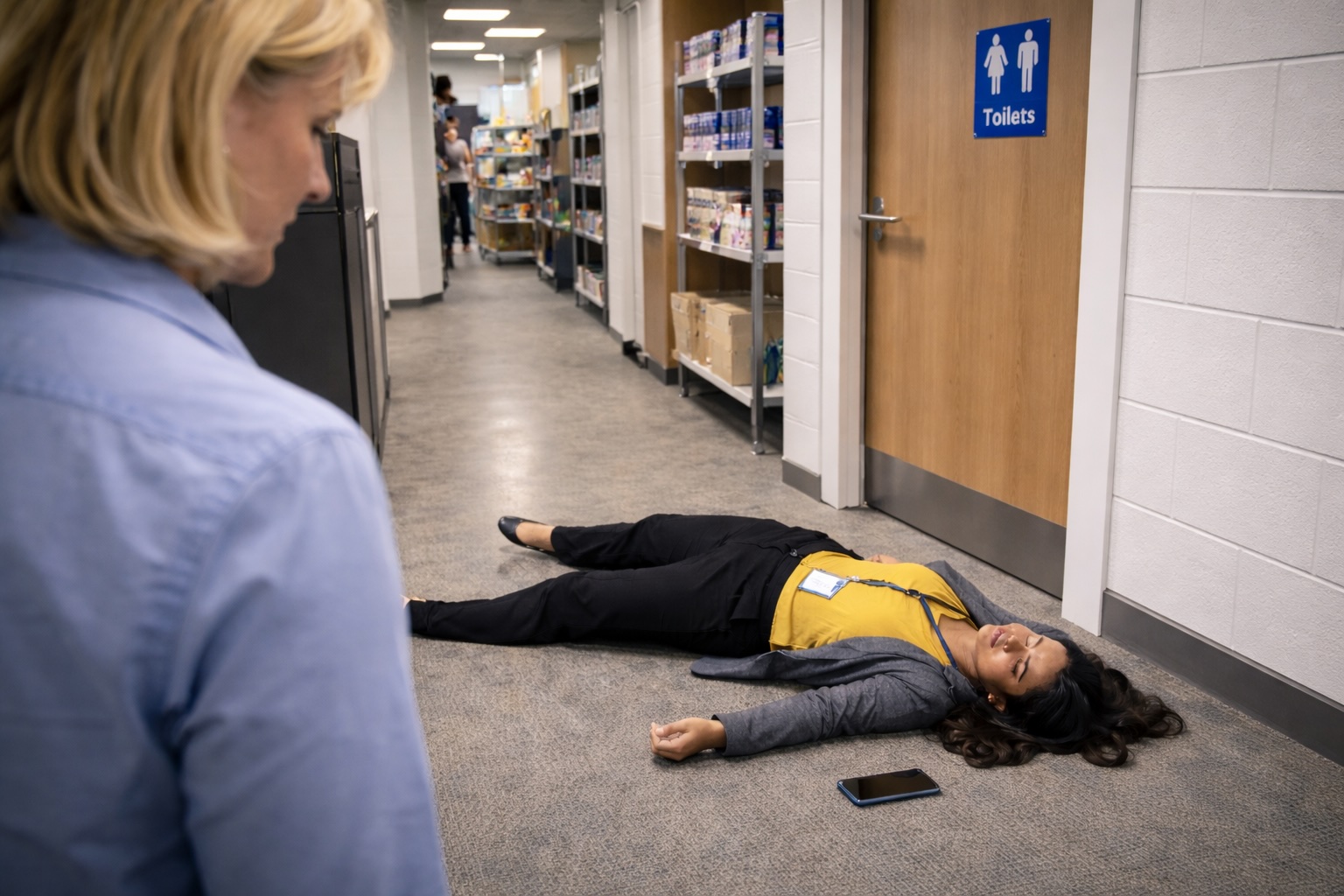
A collapsed colleague in a leisure centre corridor doesn’t look or feel the same as an incident on a busy construction site or a situation in a warehouse goods-in area. The pressures, hazards, distractions, and decisions change — and the assessment should reflect that.
From 2nd March: scenario-based, industry-tailored assessments
From 2nd March, we’re launching scenario-based, industry-tailored assessments across our first aid courses — designed to test what matters most: judgement, prioritisation, and safe action in realistic workplace conditions.
Why industry context matters
Most learners aren’t trying to become clinicians. They want to be confident, competent first aiders in their workplace — under their conditions.
When assessment questions are disconnected from the learner’s day-to-day reality, you get predictable problems:
- Learners disengage (“this isn’t relevant to my job”)
- Performance is skewed by unfamiliar context rather than actual competence
- The assessment measures memory of generic wording, not decision-making under pressure
- Confidence drops, even when the learner could handle the situation at work
Putting learners inside a realistic scenario changes everything. It tests what matters most: workplace decision-making, not textbook recall.
What scenario-based assessment looks like
Instead of abstract questions, learners are placed into a photorealistic workplace situation that mirrors their environment and role.
They’ll see realistic settings and prompts like:
- A colleague collapsed in a back-of-house corridor
- A deep laceration in a site office during a busy shift
- A casualty on a factory floor with noise, movement, and time pressure
- A workplace incident where bystanders, hazards, and distractions affect decisions
They then answer questions that reflect real first aider responsibilities:
- What do you do first?
- What are the risks around you?
- What would make you stop and get help?
- How do you manage the casualty safely and calmly?
- What are your boundaries as a workplace first aider?
Built for multiple industries — without copy/paste
We’ve designed scenario sets that reflect common sector realities, including:
- Logistics and warehousing
- Construction
- Retail
- Education
- Manufacturing
- Leisure
That means the setting, hazards, background activity, and overall “feel” of the scenario match the learner — rather than forcing everyone into the same fictional workplace.
Better assessment, fairer outcomes
A big advantage of scenario-based assessment is fairness.
When learners are assessed inside a context they recognise, performance is more likely to reflect their real competence, not their ability to translate generic questions into their own world.
It also supports consistency in marking and learning outcomes because it tests the same core first aid principles — just applied in a setting that makes sense.
Why this matters for employers
From an employer perspective, this isn’t just “a nicer assessment”. It strengthens confidence that the training translates into real workplace readiness:
- Learners are tested on realistic judgement and actions
- Scenarios encourage hazard awareness and safe practice
- It reinforces the right behaviours under pressure
- It helps learners remember what to do because they’ve seen it play out in context
It’s a practical improvement that supports both compliance and capability.
Leading the shift to modern first aid training
We believe assessments should reflect the real world — and we’re proud to be pushing that standard forward.
Scenario-based, industry-tailored assessment is a meaningful step towards what modern first aid training should be: relevant, realistic, and built around real decisions.
Want to see it in action?
We can share a demo and walk you through how the scenarios align to course outcomes — and what this looks like for your teams.
Request a Demo